2012 - Motilal Nehru 150th Birth Anniversary | Commemorative Coin
The 3rd commemorative coin of 2012 was released to mark the 150th Birth Anniversary Motilal Nehru.

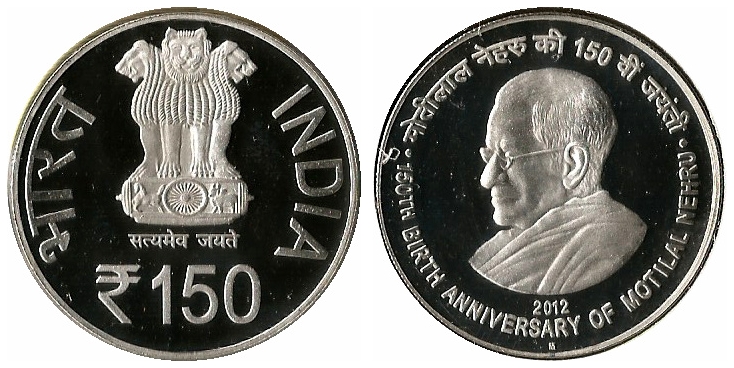
Motilal Nehru was one of the most influential leaders of India’s freedom movement, remembered for his intellect, statesmanship, and unwavering commitment to national service. Born in 1861 in Delhi, he rose from a distinguished legal career to become a central figure in the Indian National Congress and one of the architects of India’s early constitutional and political thought. As a barrister of exceptional calibre, he earned immense respect in Allahabad and across the country, but it was his deepening involvement in the struggle for independence that defined the lasting legacy he left behind. His transition from a successful lawyer to a dedicated nationalist reflected the awakening of an entire generation that chose to place the country’s interests above personal prosperity.
Motilal Nehru played an instrumental role in shaping the Congress into a more structured and effective political organisation. His leadership was marked by clarity of vision and a modern outlook, which helped him participate actively in debates on constitutional reform, self-governance, and civil liberties. He became the Congress President twice, in 1919 and 1928, guiding the organisation through some of its most pivotal years. His home, Anand Bhavan in Allahabad, became a hub of political discussion and planning, hosting countless leaders who would later play major roles in India’s independence. Motilal’s close association with Mahatma Gandhi also saw him embrace the principles of non-cooperation, leading him to give up his luxurious lifestyle and adopt simpler living in solidarity with the national movement.
One of Motilal Nehru’s most enduring contributions was his chairmanship of the Nehru Committee, which drafted the Nehru Report of 1928—India’s first major attempt to frame a constitutional blueprint for self-governance. The report proposed dominion status, fundamental rights, and a parliamentary system for India, laying the groundwork for constitutional thinking that would eventually find expression in the independent nation’s governance structure. Although the report faced resistance from some quarters, it marked a significant milestone by demonstrating India’s capacity to envision and articulate its own constitutional aspirations without external guidance.
Motilal Nehru was also deeply committed to civil rights, social reform, and political unity. He advocated for Hindu–Muslim harmony, understanding that India’s freedom depended on solidarity among its diverse communities. His courage was evident in his numerous imprisonments, which he faced with resolve and dignity. As a father, he left a profound influence on his son, Jawaharlal Nehru, shaping his political outlook and nurturing his rise as a national leader. The strong bond between them symbolised the generational continuity of India’s struggle for self-rule.
Motilal Nehru passed away in 1931, leaving behind a legacy that continues to hold significant historical importance. He is remembered not only as a senior national leader but also as a visionary who combined legal intellect, political maturity, and unwavering patriotism. His contributions to constitutional thought, organisational leadership, and the freedom movement remain integral to India’s democratic foundation and the story of its fight for independence.
Release Function:


Comments
Post a Comment