Posts

Showing posts with the label Numismatics Facts

Beyond the Numbers: Portrait Variants in the Mahalanobis Coin
Image
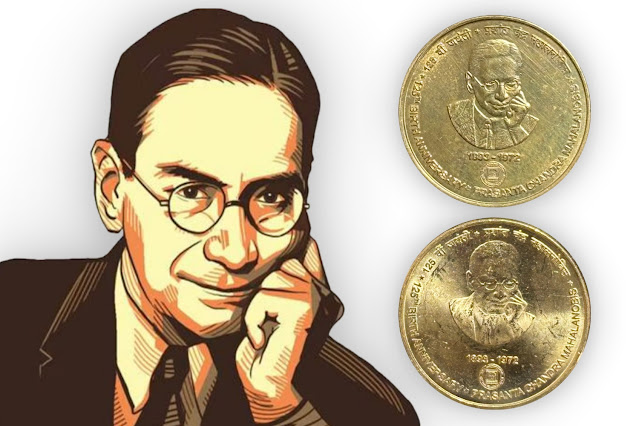
In 2018, the Government of India issued commemorative coins in denominations of ₹125 and ₹5 to mark the 125th Birth Anniversary of Prasanta Chandra Mahalanobis , a visionary statistician and the founder of the Indian Statistical Institute.  While the ₹125 coin was issued as a non-circulating commemorative, the ₹5 coin was released for general circulation.  However, despite being the most recent circulating commemorative issued to date, the ₹5 coin was rarely seen in everyday transactions. In recent times, collectors have observed and discussed two distinct varieties of this coin, despite both carrying the same core design. These are commonly referred to as the small portrait and large portrait versions. The obverse side of the coin features the Ashoka Lion Emblem positioned above the denomination ₹5, along with the inscriptions “भारत”,  “INDIA” and “सत्यमेव जयते.”  The reverse side displays the portrait of Prof. Prasanta Chandra Mahalanobis, accompanied by the logo ...
The Kuka Movement: The Story Behind the ₹100 and ₹5 Coins

Image
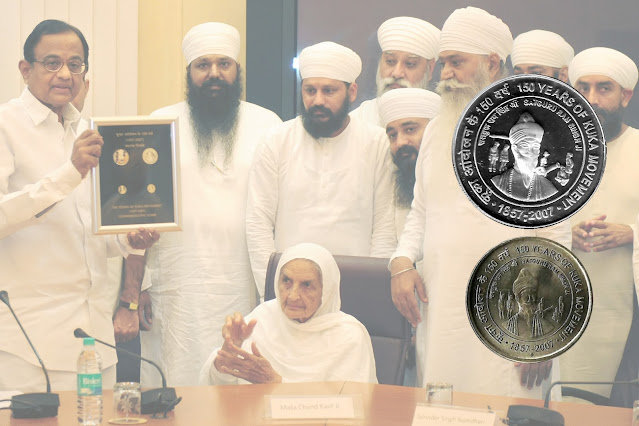
The then Union Finance Minister P. Chidambaram released the commemorative coin with the denominations of ₹100 and ₹5 marking 150 years of Kuka Movement on October 5, 2012, few knew that the coin was designed by Ludhiana's Mr. Jeevandeep Singh. The then Minister for Tourism and Culture, Smt. Ambika Soni, announced that an event related to the Kuka Movement would be included in the suggested list of anniversaries to be observed during the 2007-08 commemoration of the 150th Anniversary of the First War of Independence and related events. The Indian Council of Historical Research vetted the list and identified the date of the Kuka Movement event as April 20, 1872. The suggested list was circulated to all State and Union Territory Governments, encouraging them to organize functions in collaboration with all sections of society. A numismatist and resident of Chandigarh, Mr. Jeevandeep created the design in 2009 and handed it over to Sant Surinder Singh Namdhari, the vice-chairman of t...

Fact Check: ₹500 Banknote Featuring Lord Ram’s Portrait

Image
As the grand consecration of the Ram Mandir in Ayodhya approaches, an image of a ₹500 banknote has emerged on the internet, depicting Lord Ram. Widespread claims suggest that the image of Lord Ram has replaced Mahatma Gandhi on the banknote. It is important to note that as of now, neither the Central Government nor the Reserve Bank of India has made an official announcement regarding the issuance of new 500 rupee notes featuring images of Lord Ram and the Ram temple. This supposed commemoration is in connection with the consecration of the Ram temple in Ayodhya on January 22, 2024. These banknotes are manipulated creations intended to deceive individuals by exploiting the sentiments associated with the Ayodhya Ram Mandir. The most recent ₹500 banknotes were introduced in 2016, concurrently with the issuance of ₹2000 banknotes, followed by denominations of ₹10, ₹20, ₹50, ₹100, and ₹200. However, as part of the "Clean Note Policy," the Reserve Bank of India (RBI) has decid...

Reserve Bank of India Carifies on Star Series Banknotes

Image
The Reserve Bank of India (RBI) issued a clarification stating that banknotes bearing a star (*) symbol in the number panel are genuine and fully valid legal tender, carrying the same value as any other currency note. In its official press release, dated July 27, 2023, the RBI noted, “It has come to the notice of the Reserve Bank that the validity of banknotes with a Star (*) symbol present on the number panel has recently been the subject of discussions on some social media platforms. In this connection, it is informed that the Star symbol is inserted in the number panel of a banknote that is used as a replacement for defectively printed banknotes in a packet of 100 pieces of serially numbered banknotes.  A banknote with a Star (*) symbol is identical to any other legal banknote, except that in the number panel a Star symbol is added between the prefix and the serial number. The Star symbol is an identifier that it is a replaced/reprinted banknote.” The introduction of star bankno...

The VVIP Coin Set Scandal Shaking the Numismatic Market

Image
In recent times, there has been a major scandal involving fake VVIP coin sets being sold as originals at numismatic exhibitions, online platforms, and social-networking sites. These counterfeit sets are produced with the intention of deceiving collectors or unsuspecting buyers into believing they are acquiring genuine and valuable pieces. Tower-type sets are usually presented to delegates invited as Guests of Honour for the release of commemorative coins . These sets are extremely limited—typically restricted to only 5–6 pieces—while frame sets are even rarer, often limited to just one or two issued by the India Government Mint. Over the last five to six years, several tower-type and frame-type sets were illicitly manufactured by a particular dealer and sold at exorbitant prices. These sets generally appear only after the official coin bookings open at the India Government Mint. For example, the Proof Set of Raja Ram Mohan Roy, originally issued at ₹3,697, had its coin removed and plac...

Mule Coins and Errors in UNC Sets of Hyderabad Mint

Image
The Hyderabad mint has issued re-strikes of many commemorative coins in UNC sets in the recent times, it has found that there are many varieties, mules and errors which were made due to negligence. Some of them are listed below: Shri Mata Vaishno Devi Shrine Board The initial issued re-strike coins of ₹25 doesn't have the Hyderabad (★) mint mark. The mint has rectified the error in later releases.  Ter Centenary of Gur-Ta-Gaddi Two sets were released two lion variety with "₹" symbol and without "₹" symbol, the "₹" symbol is as mule. Atal Bihari Vajpayee Initially, the set was released with wrong description as "One Hundred Fifty Rupees" inside the set card instead of "One Hundred Rupees", but later was rectified with correct description. Both has the different lion varieties and initial coin is mule. XIX Common Wealth Games 2010 The coins of both individual small blister pack of Rs 2 and Rs 5 coins doesn't have the Hyderabad (★...

Explained: Why Do People Choose to Get Coins Graded?

Image
Coins are evaluated based on their rarity, cost, and condition, with a higher condition contributing to a higher coin worth. When a coin is auctioned or sold by a dealer, there is an incentive for them to portray the coin as being in the highest possible grade to maximize its value. Many collectors lack the knowledge or experience to assess the grade of a coin, even though coin grading services have been in existence since the 1980s. The two largest grading services, NGC and PCGS, have collectively graded nearly 70 million coins over the past 30 years. It's important to note that these grading services do not appraise the coins or assign them a specific value. Instead, they provide a numerical grade, and the market determines the coin's value based on that grade. Not All Coins Are Worth Grading The most common question we receive from first-time buyers and sellers is, "Should I get my coin graded?" The short answer is that it simply depends on the current value of ...

Explained: Few New Definitive Series 2019 Coins Becoming Rare?

Image
The Hon'ble Prime Minister Shri Narendra Modi unveiled a  new series of definitive coins  designed to cater to visually handicapped disabled citizens last year. This coin series features denominations of ₹1, ₹2, ₹5, ₹10, and ₹20. The coins are crafted with specific considerations to enhance accessibility and usability for individuals with visual impairments. The ₹2, ₹5, and ₹10 coins were released into circulation during the second half of last year, minted with the year 2019. Unfortunately, the ₹1 and ₹20 coins did not enter circulation in the same period, although the  ₹20 coin is expected to be released soon , as reported last month, likely minted in the year 2020. This circumstance may contribute to the limited availability of coins with denominations of ₹1 and ₹20 minted in the year 2019, potentially making them rare. Historically, coins like the 50 Naye Paise 1957 and 1959, as well as the 1 Rupee 1982, have become extremely rare, commanding significant prices in the...

Comparison of the New ₹10 Coin with the Older ₹10 Coins

Image
The long-awaited new ₹10 coin of the new series 2019, first released last year, has now begun entering circulation from most of the India Government Mints.  Collectors and the general public have reported receiving these coins more frequently in recent weeks, marking the gradual phase-out of earlier bi-metallic ₹10 coin varieties that had long faced quality concerns. The new series ₹10 coin shows a noticeable improvement in overall minting quality and finish when compared to its predecessors. This upgraded coin continues the bi-metallic format but features a nickel–silver center, surrounded by a nickel–brass outer ring. This combination not only enhances the visual appearance of the coin but also significantly improves resistance to tarnishing and moisture. In contrast, earlier ₹10 coins used a copper–nickel core paired with an aluminum–bronze ring, a composition that was more susceptible to oxidation. As a result, many of the older coins developed dull or patchy surfaces after exp...

Identical Sizes, Different Values: The Coin Recognition Problem

Image
The new coin series was expected to include tactile features for easier recognition, but with overlapping sizes may still pose challenges for the visually impaired. However, when comparing the older ₹1 coin, the existing ₹2 coin, and the newly launched ₹5 coin, it becomes apparent that all three share the same 25 mm diameter and have nearly identical thickness, making physical distinction challenging. The last issuance of the 25 mm ₹1 coin dates back to 2004, while the ₹2 coin with the same diameter continued to be minted until 2019. With the introduction of the new coin series—particularly the new ₹5 coin—circulation now includes multiple denominations using the same size profile, creating an overlap and potential confusion for both the visually impaired and the general public. Although the government has indicated that the new series will eventually replace the older denominations, such transitions in India typically take several decades to fully phase out earlier series from circula...

Why Are ₹10 Coins Still Not Widely Accepted?

Image
Many people are unaware that India’s first ₹10 coin was minted in 1969 to commemorate the Birth Centenary of Mahatma Gandhi , followed by issues marking the 25th Anniversary of the FAO in 1970 and 1971 , and the 25th Anniversary of Independence in 1972 . Although these were circulating commemorative coins, they were struck in silver alloys and released only in limited quantities. The modern Bi-Metallic ₹10 coin was introduced in 2005, but it initially faced widespread disapproval due to perceived poor quality. The familiar preference for banknotes and the easy availability of newly designed ₹10 notes further slowed public acceptance. Since the cost of minting a ₹10 Bi-Metallic coin is relatively low—almost comparable to a ₹5 nickel-brass coin—its intrinsic metal value never exceeded its face value, making it unsuitable for melting or resale in grey markets. This diminished speculative interest in the coins, though small-scale duplication still emerged, estimated at about 1–2% of total...

Beware of Fake Nabakelebara Coins on Online Shopping Portals

Image
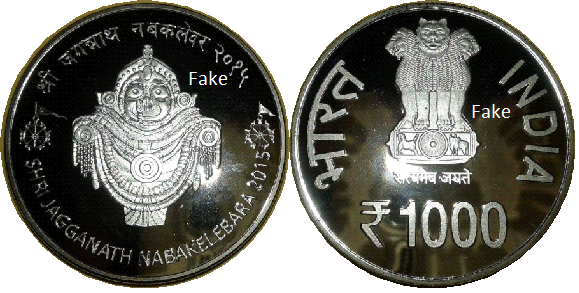
The counterfeit ₹1000 commemorative coin featuring the Shri Jagannath Nabakelebara theme have begun appearing across various online shopping platforms, despite the fact that the official coin has not yet been commenced bookings from the India Government Mint, Mumbai.  This early flood of fakes is not only alarming but also highlights the growing vulnerability of unsuspecting collectors who rely on online marketplaces. Spotting these fake coins is relatively easy due to a glaring spelling error: the inscription on the counterfeit reads “Shri Jagganath Nabakelebra” instead of the correct “Shri Jagannath Nabakelebara.” Such inaccuracies are a common trait among forged commemorative pieces, making it essential for collectors to examine details closely before making any purchase. This is not the first time counterfeit commemorative coins have emerged even before official mint releases. Earlier reports highlighted similar instances where fraudulent coins circulated widely, misleading b...

Why No Mint Marks on United States Coins from 1965 to 1967

Image
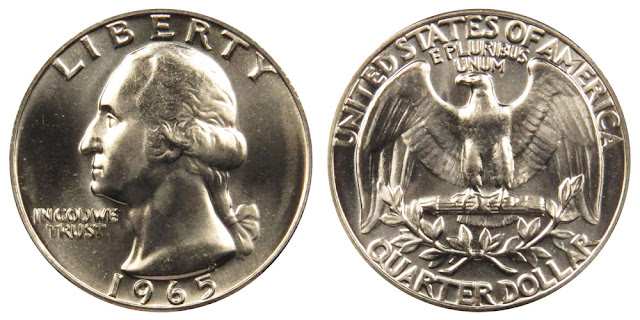
Many people wonder why they can't find any coins from 1965, 1966, or 1967 with a mint mark. The truth is that the United States Mint did not officially produce any coins with a mint mark during these years due to a coin shortage. The coin collecting craze in the early 1960s led to a nationwide coin shortage. People were hoarding coins for their collections, and others were pulling silver coins out of circulation to capitalize on the rising silver bullion values. In response, the U.S. Mint decided to discourage coin collectors from saving coins based on mint marks by not including any mint marks on coins from 1965 to 1967. The Coin Act of 1965 mandated the removal of mint marks, a practice that continued for five years. Additionally, to address rising silver prices, the Mint eliminated silver from dimes and quarters in 1965 and reduced the half-dollar's silver content from 90% to 40%. In 1968, Congress acted to restore mint marks to coins, but now they would be located on the ob...

The Coin-Laden Trees: A Unique Spectacle in Wales

Image
Money doesn't grow on trees, they say, except perhaps in the ever-eccentric Portmeirion. However, it certainly appears to do so on the mysterious coin-studded trunks scattered around the woodlands of the United Kingdom. The peculiar phenomenon of gnarled old trees adorned with coins embedded in their bark has been observed on trails from the Peak District to the Scottish Highlands. These captivating spectacles often feature coins from centuries ago deeply embedded in the bark, shaped by the passage of time. While the tradition of making offerings to deities at wishing trees dates back hundreds of years, this combination of the man-made and the natural is far more rare. In the past, it was believed that divine spirits inhabited trees, and these trees were often adorned with sweets and gifts, a practice that continues today during Christmas. This act is reminiscent of tossing money into ponds for good luck or the contemporary trend of couples attaching 'love padlocks' to bri...

Fake Chinese Coins Flooded in Indian Market

Image
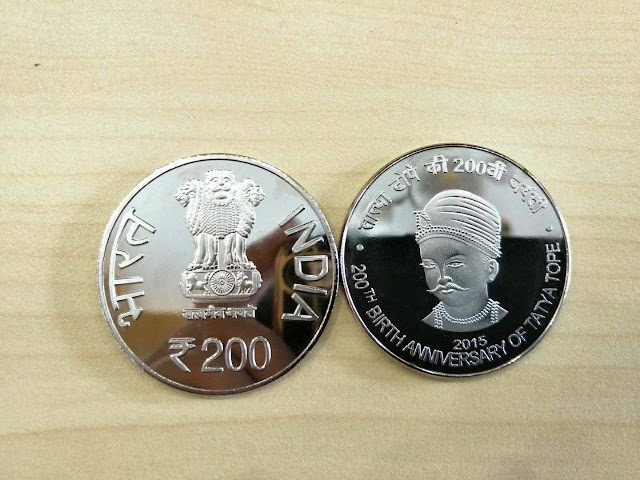
Many individuals might assume that acquiring commemorative coins in Proof or UNC coin sets from e-commerce platforms like eBay or Shopclues will enhance their collections. However, it's crucial to exercise caution due to the prevalence of counterfeit coins originating from China. Recently, the Indian market has witnessed an influx of counterfeit coins. The quality of these imitations is exceptional, featuring a high-grade finish. The Proof and UNC sets of the Rs. 200 coin featuring Tatya Tope are yet to be released by the India Government Mint. The metal composition for the ' 200th Birth Anniversary of Tatya Tope ' and ' Mata Vaishno Devi Shrine Board ' coins is a Quaternary Alloy, comprising 50% Silver, 40% Copper, 5% Nickel, and 5% Zinc. The ' 1000 Years of Brihadeeswarar Temple ' coin comprises 80% Silver and 20% Copper. However, these counterfeit coins are produced with base metal, lacking any numismatic value. It's a pleasure to share ima...

Did You Know: Indian One Rupee Banknote Issued in Burma

Image
Before its annexation by the British Empire, Burma lacked its own banknotes. Following the three Anglo-Burmese annexations, Burma became a province of India instead of an independent colony. Consequently, Banknotes of India were used in Burma after the British occupation of lower Burma in 1824. With the enactment of the Indian Paper Money Act in March 1862, granting the Government of India power over the issue and circulation of banknotes in India, these notes were also circulated in Burma. The Currency Department established a Circle of Issue at Rangoon in 1882. Even after its separation from the Indian Empire in 1935, Burma continued to be under the financial administration of the Indian Government. This unique situation led to the Central Monetary Authority of India issuing notes for Burma, marking the only instance where one country issued notes valid in another during civilian rule—a remarkable event in the history of paper money. The initial overprinted issue was succeeded by a s...

Know the Mintmarks on Coins of India

Image
Every coin minted in India bears a mint mark, a unique symbol that identifies the mint where it was produced. Mint marks primarily serve the purpose of traceability, enabling the issuing authority to identify the origin of each coin. India currently has four Government Mints, some of which trace their origins to the pre-Independence era. The newest of these is the Noida Mint, established in 1988. In the past, India occasionally faced shortages of circulation coins and relied on foreign mints to supplement domestic production. Today, however, the country has sufficient—and often surplus—minting capacity to meet its own coinage requirements through its four Government Mints. In addition to producing India's circulation and commemorative coins, the Noida Mint has also undertaken the minting of coins for several foreign countries. Mint marks carried by coins minted in India: Calcutta / Kolkata Mint: Established in 1757; Mint marks:  No mint mark K - stands for Kolkata (since 2026) Bomb...

How India Adopted the Decimal Coinage System in 1957

Image
The Indian coinage went decimal on April 1, 1957, ten years after India gained Independence from British rule. Although coins have been used as units of monetary value in India for centuries, the history of modern Indian coinage is largely a story of the past two hundred years, beginning with the coinage systems developed under the East India Company, the precursor to the British Raj. Independence in 1947 brought political freedom, but the country initially retained the inherited non-decimal monetary system. Thus, even the first coins of the Republic, introduced in 1950, continued the traditional rupee-anna-pice system. The journey from 16 annas to 100 paise was finally completed on April 1, 1957, marking one of the significant monetary reforms of independent India. The idea of decimalising Indian coinage was not new. A Decimal Coinage Bill had been introduced in the Central Legislature on February 18, 1946, but it did not progress amid the political developments leading to Independenc...